
 by
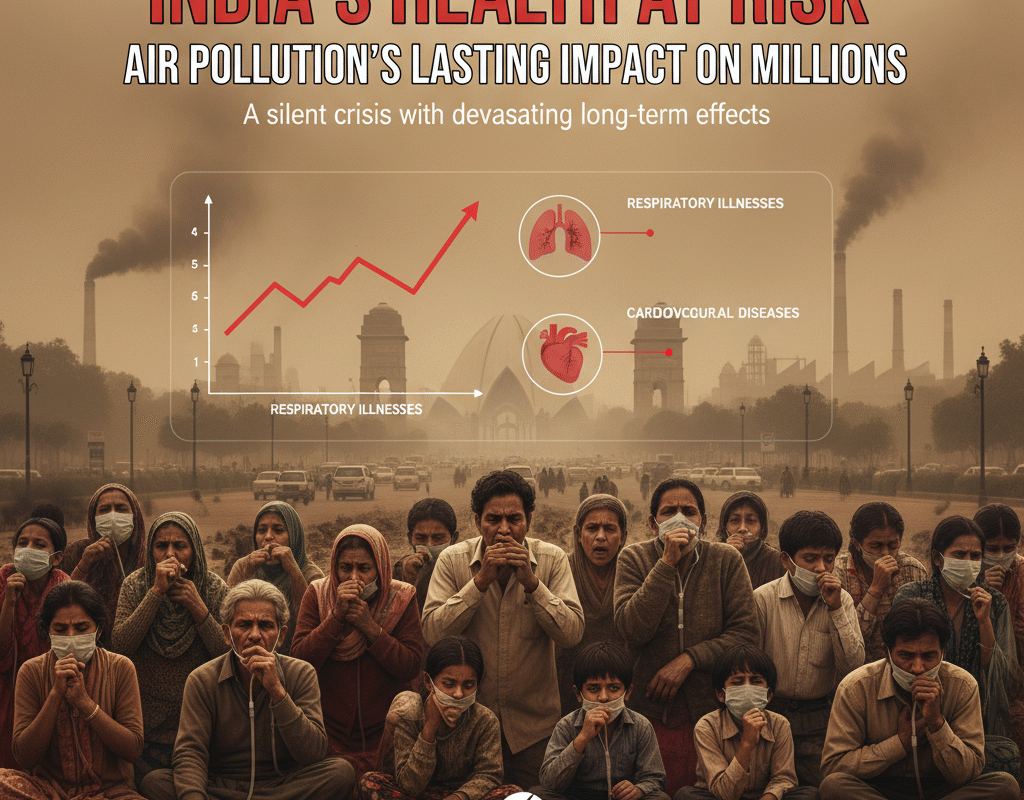
by Air pollution today stands as an invisible crisis, quietly shaping the destiny of human health across generations. One of my elderly who is a physician with over two decades of clinical experience at a leading hospital, the transformation observed in disease trends is starkly clear: air pollution has evolved from largely being a respiratory irritant to becoming a decisive force behind chronic and multisystem diseases.
Air Pollution – The Chronic Disease Catalyst
The 21st century has witnessed dramatic urbanization, industrial growth, and vehicular expansion, especially in countries like India. These advancements, while signifying progress, have come at a severe ecological and human health cost. Air pollution, particularly in the megacities of the world, introduces a complex mixture of particulate matter (PM), nitrogen oxides, sulfur dioxide, volatile organic compounds, polycyclic aromatic hydrocarbons, heavy metals, and ground-level ozone.
When inhaled, these pollutants penetrate deep into the lungs and systemic circulation. The result is chronic inflammation, oxidative stress, and damage spanning beyond the respiratory system. The International Agency for Research on Cancer classifies outdoor air pollution as a human carcinogen, underscoring its relevance in diseases like lung cancer, cardiovascular conditions, and stroke.
Data and Disease in Modern India
Recent research and international health statistics reveal alarming numbers. According to the State of Global Air 2025 report, air pollution was directly linked to approximately two million deaths in India during 2023—a whopping 43% increase since the turn of the millennium. Notably, 89% of these deaths were due to chronic non-communicable diseases:
A closer analysis shows the following:
- Around 70% of all COPD deaths in India are attributable to air pollution exposure.
- 33% of lung cancer deaths can be linked to poor air quality.
- More than 25% of heart disease deaths are due to pollution.
- Nearly 20% of diabetes-related deaths have direct pollution associations.
Further, the average life expectancy in cities like Delhi has plummeted, losing up to 11.9 years compared to less polluted regions. In satellite towns such as Noida, Gurgaon, Faridabad, and Ghaziabad, the reduction approaches 11 years.
Health Impacts Beyond the Lungs
Chronic exposure to polluted air does not spare any organ system. Research now supports connections to:
- Neurological disorders, including dementia and Alzheimer’s disease, due to fine particle (PM2.5) exposure causing inflammation and brain tissue damage.
- Type 2 diabetes and obesity, with air pollution acting as a systemic inflammatory trigger.
- Impaired immunity, increased hospitalization rates, reproductive and developmental problems.
For children, who represent our most vulnerable group, the repercussions are lifelong. Early exposure leads to stunted lung function and increases risk for chronic illness in adulthood.
Case Study – The Changing Face of COPD and Lung Cancer
Traditionally, tobacco smoking occupied the center stage in causing COPD and lung cancer. Today, in urban centers, as much as 50% of COPD cases and 40% of lung cancer cases are seen in individuals who have never smoked. This change is due solely to ambient and household air pollution. Hospital records show marked deterioration in patients’ conditions during pollution spikes, many requiring oxygen therapy and intensive care.
Why Solutions Cannot Wait
The crisis of air pollution is both immediate and insidious. It shortens lives, burdens families with chronic disease management, and exerts tremendous pressure on the healthcare system. Global studies consistently rank air pollution as the largest environmental health risk, second only to malnutrition and tobacco use.
Tackling this problem demands:
- Strict enforcement of air quality standards and emission controls
- Transition to clean energy sources
- Expansion of green spaces and use of pollution-monitoring technologies
- Public awareness campaigns focusing on vulnerable populations
Call to Action
As someone who has watched disease patterns increasingly shaped by air pollution, the evidence is overwhelming and deeply personal. Every year lost to chronic disease, every child unable to live to full potential, and every family shattered by premature passing is a collective failure. This editorial calls for urgent policy action, air quality improvement measures, and citizen engagement. Clean air is not a luxury—it is the birthright of every individual.
References:
- Effects of air pollution on human health
- State of Global Air 2025 report
- Epidemiological studies on chronic disease and pollution
The future of public health depends on the choices made today—for ourselves, and generations yet to come.


