
 by
by How a 100-metre rule, policy apathy and political convenience are dismantling India’s oldest mountain range
Aravallis at the brink: A death warrant in legal disguise
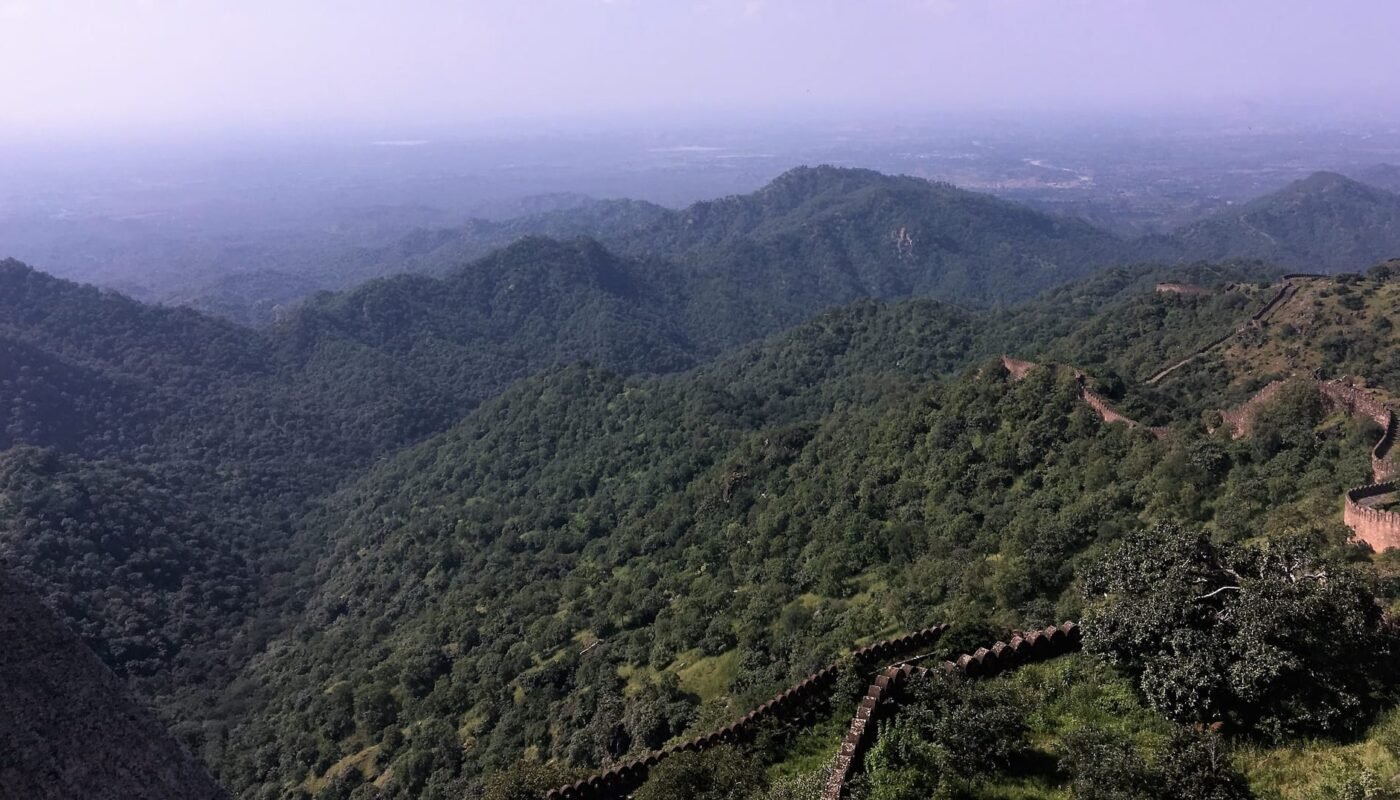
The Aravalli Hills, ancient sentinels stretching across Gujarat, Rajasthan, Haryana and the Delhi-NCR, are under siege—not from natural forces, but from a myopic policy shift that borders on ecological sabotage. On 20 November 2025, the Supreme Court accepted the Union government’s new elevation-based definition, under which only landforms rising at least 100 metres above local relief qualify as Aravalli Hills, potentially stripping legal protection from nearly 90% of the terrain. An internal Forest Survey of India assessment, placed before the court, found that just 1,048 of 12,081 mapped hills meet this benchmark, turning what was once a protective legal shield into a sieve through which most of the range can now slip.
Redefining a lifeline into a mining belt
The Aravallis are not abstract contours on a survey map; they are a living lifeline that recharge groundwater, temper extreme heat, block advancing desertification and filter dust for millions in Delhi-NCR and beyond. Low-lying ridges, rocky knolls and scrub-covered outcrops below 100 metres are ecologically indivisible from higher hills, yet the new rule demotes them to expendable real estate, opening the door for mining, road-building and speculative construction. Experts warn that carving gaps into these corridors risks drying aquifers in Gurugram and Faridabad, intensifying dust storms and severing wildlife movement routes that are already hanging by a thread.
Silencing science, sidelining safeguards
The most alarming aspect of this shift is how thoroughly it sidelines scientific caution and existing safeguards. Earlier approaches, including those reflected in internal Forest Survey work and past court orders, treated the Aravallis as an interconnected system, not as isolated “towers” measured by a tape from the valley floor. By adopting an arbitrary 100‑metre threshold, the state has cherry‑picked a convenient technicality that simplifies administrative tasks but grossly misrepresents ecological reality, undermining decades of jurisprudence that recognised the range as an ecologically sensitive zone. The promise of a “sustainable mining plan” sounds hollow when the very act of redefinition has expanded the potential mining canvas at the cost of forests, commons and climate resilience.
Political optics vs ecological reality
Unsurprisingly, the backlash has been fierce. Former Rajasthan chief minister Ashok Gehlot has called the new definition an invitation to “environmental destruction”, updating his social media profile picture to a “Save Aravalli” banner and urging the Centre to rethink the move in the interest of future generations. Opposition leaders and environmental groups alike have pointed out that this decision sits uneasily with the government’s green rhetoric at global climate forums, where India projects itself as a champion of sustainable development even as it hollows out one of its most crucial natural barriers at home. Political leaders can change their display pictures, but unless those in power change the policy framework itself, such gestures risk becoming symbolic cover for systemic neglect.
Villages on the frontline of “development”
While policy debates play out in Delhi and Jaipur, the first to feel the heat are communities living in and around the Aravallis. In Kot village of Haryana, an October 30 notification for kilabandi—demarcation of land into smaller plots—has triggered fears that common hilly land classified as gair mumkin pahar will be gradually fragmented to benefit powerful private players. Villagers, already in court over earlier consolidation attempts, insist that only agricultural land should be touched, not the hills that sustain local ecology and livelihoods, yet officials brush aside these anxieties as “unfounded”, citing technicalities of measurement and procedure. Similar protests in other Aravalli villages in Rajasthan and Haryana reflect a shared anxiety: that once the legal status of hills is weakened, the slide from commons to commodity will be swift and irreversible.
The missing accountability of a silent state
What makes this moment particularly troubling is the near-total absence of accountability. The Centre pressed for a restrictive definition before the Supreme Court, but has offered neither a transparent ecological impact assessment nor a participatory consultation process with affected states and communities. Repeated assurances that no new mining leases will be granted until mapping is completed ring hollow when the very mapping criteria are designed to exclude large swathes of fragile terrain from protection in the first place. If things go wrong—as they almost certainly will in the form of worsening air pollution, drying wells and collapsing biodiversity—the burden will fall on citizens, while the architects of this policy retreat behind bureaucratic language.
From legal setback to people’s movement
Yet this story is not over; it is at a crossroads. Environmental lawyers and activists are already exploring avenues to seek a review of the judgment, armed with fresh hydrological, climate and biodiversity data that show how indispensable the sub‑100‑metre ridges are to the stability of the entire system. Grassroots campaigns such as #SaveAravalli are mobilising students, residents’ groups and farmers to treat the issue not as a niche “green” concern but as a public health, water security and climate survival question for north India. If the government refuses to act as trustee of these commons, citizens will have to push institutions—courts, legislatures and local bodies—to reclaim that role.
A test of India’s climate credibility
Ultimately, what is at stake in the Aravallis is India’s climate credibility. A country that dismantles its oldest mountain chain to ease mining and construction cannot credibly claim to be serious about climate adaptation or air quality. The government still has a chance to step back: to revisit the 100‑metre rule, restore a landscape‑based definition, and formally recognise the Aravallis as a critical ecological zone that is off‑limits to predatory exploitation. Until that happens, every dust‑laden winter in Delhi, every dry handpump in an Aravalli village, will stand as a quiet indictment of this colossal policy failure—and as a reminder that citizens must fight for the hills that can no longer speak for themselves.
