 by
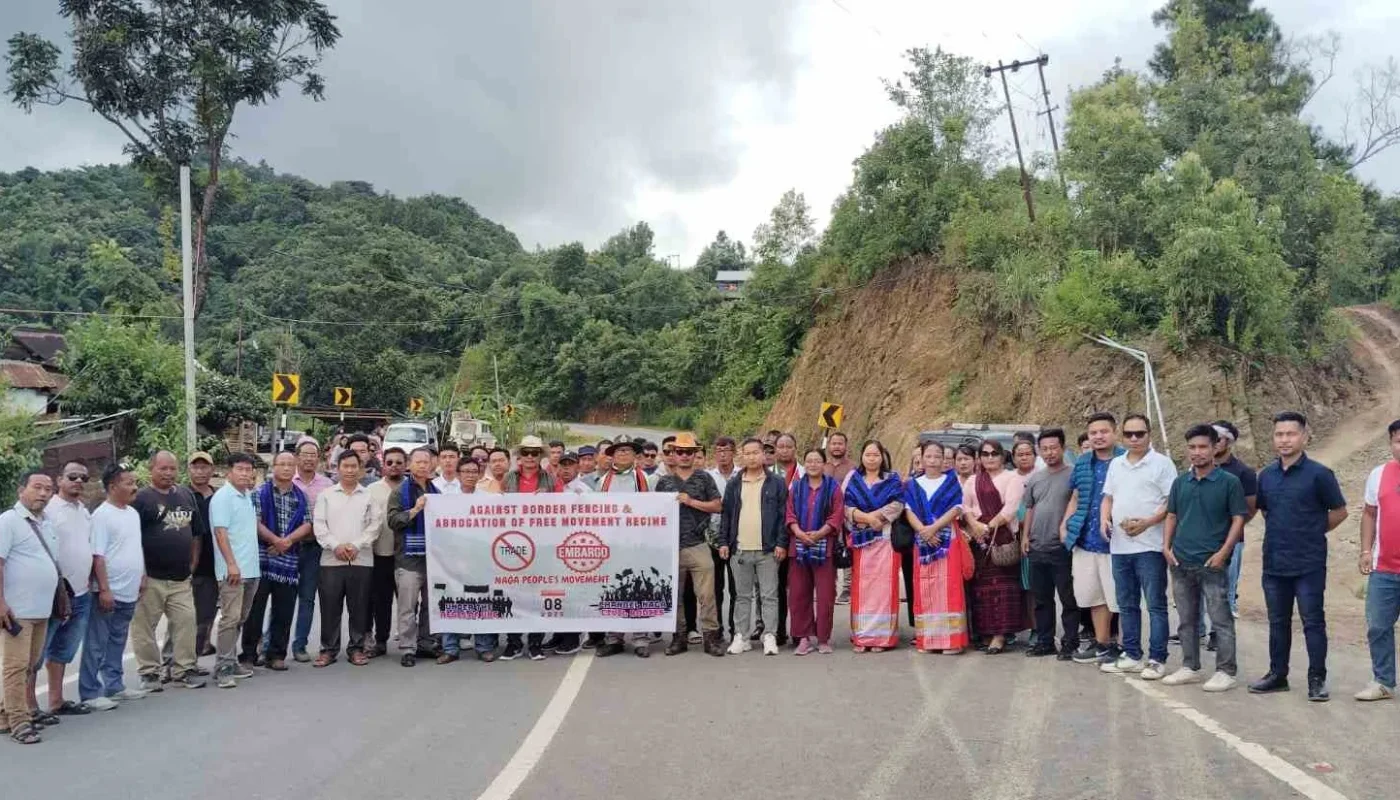
by In the northeastern state of Manipur, a significant socio-political crisis has unfolded, highlighting the delicate balance between national security concerns and the rights of indigenous communities. The government’s decision to construct a border fence along the India-Myanmar border and to revoke the Free Movement Regime (FMR) has led to widespread unrest, particularly among the Naga and Kuki communities. The United Naga Council (UNC), representing the Naga tribes, initiated a trade embargo, effectively halting the movement of goods along National Highways 2 and 37. This action underscores the deep-seated grievances of these communities and raises critical questions about governance, autonomy, and the preservation of cultural identities.
The Core Issue: Border Fencing and the Scrapping of FMR
The FMR allowed residents living within 16 km of the India-Myanmar border to cross freely into each other’s territory with minimal documentation. This arrangement facilitated familial ties, cultural exchanges, and economic interactions that have existed for generations. However, the government’s decision to revoke the FMR and construct a border fence has disrupted these long-standing practices. The UNC argues that the fencing project disregards traditional Naga territories and familial ties that span across the border, potentially fragmenting the Naga community The Times of India.
The UNC’s Response: A Strategic Protest
In response to the government’s actions, the UNC imposed an indefinite trade embargo starting on September 8, 2025. The embargo disrupted transportation along National Highways 2 and 37, vital routes for the supply of essential goods to Manipur. The UNC’s decision to suspend the embargo temporarily on September 11, 2025, following assurances from the state government to resume tripartite talks, indicates a willingness to engage in dialogue. However, the initial imposition of the embargo underscores the community’s frustration with the government’s approach to border and autonomy issues Times of Senapati.
Acknowledging Opposing Views
Proponents of the border fencing argue that the project is essential for national security, aiming to curb illegal activities such as smuggling and to strengthen border control. They contend that the revocation of the FMR and the construction of the fence are necessary measures to safeguard the country’s integrity and sovereignty. While these concerns are valid, it is crucial to recognize that the implementation of such policies without adequate consultation with affected communities can lead to unintended consequences, including social unrest and the erosion of trust between the government and indigenous populations.
Refuting the Opposition’s Argument
While national security is undeniably important, it should not come at the expense of the rights and identities of indigenous communities. The Naga and Kuki tribes have coexisted along the India-Myanmar border for centuries, with familial and cultural ties that transcend national boundaries. The abrupt revocation of the FMR and the unilateral decision to construct a border fence without meaningful consultation have disrupted these communities’ way of life. The government’s approach appears to prioritize security concerns over the preservation of cultural identities and the autonomy of indigenous populations.
A Call for Inclusive Dialogue
The situation in Manipur serves as a stark reminder of the importance of inclusive governance. The government’s failure to engage with affected communities before implementing significant policy changes has led to widespread discontent and unrest. To address the underlying issues, it is imperative that the government initiates a comprehensive dialogue with all stakeholders, including the UNC, Kuki organizations, and other indigenous groups. This dialogue should aim to find a balanced approach that considers both national security concerns and the rights of indigenous communities.
Conclusion
The unrest in Manipur, sparked by the government’s border fencing project and the scrapping of the FMR, highlights the complexities of governance in a diverse and multi-ethnic society. While national security is a legitimate concern, it should not be pursued at the expense of the rights and identities of indigenous communities. The government’s approach must be inclusive, consultative, and sensitive to the cultural and historical contexts of the affected populations. Only through such an approach can lasting peace and harmony be achieved in Manipur and other border regions.