 by
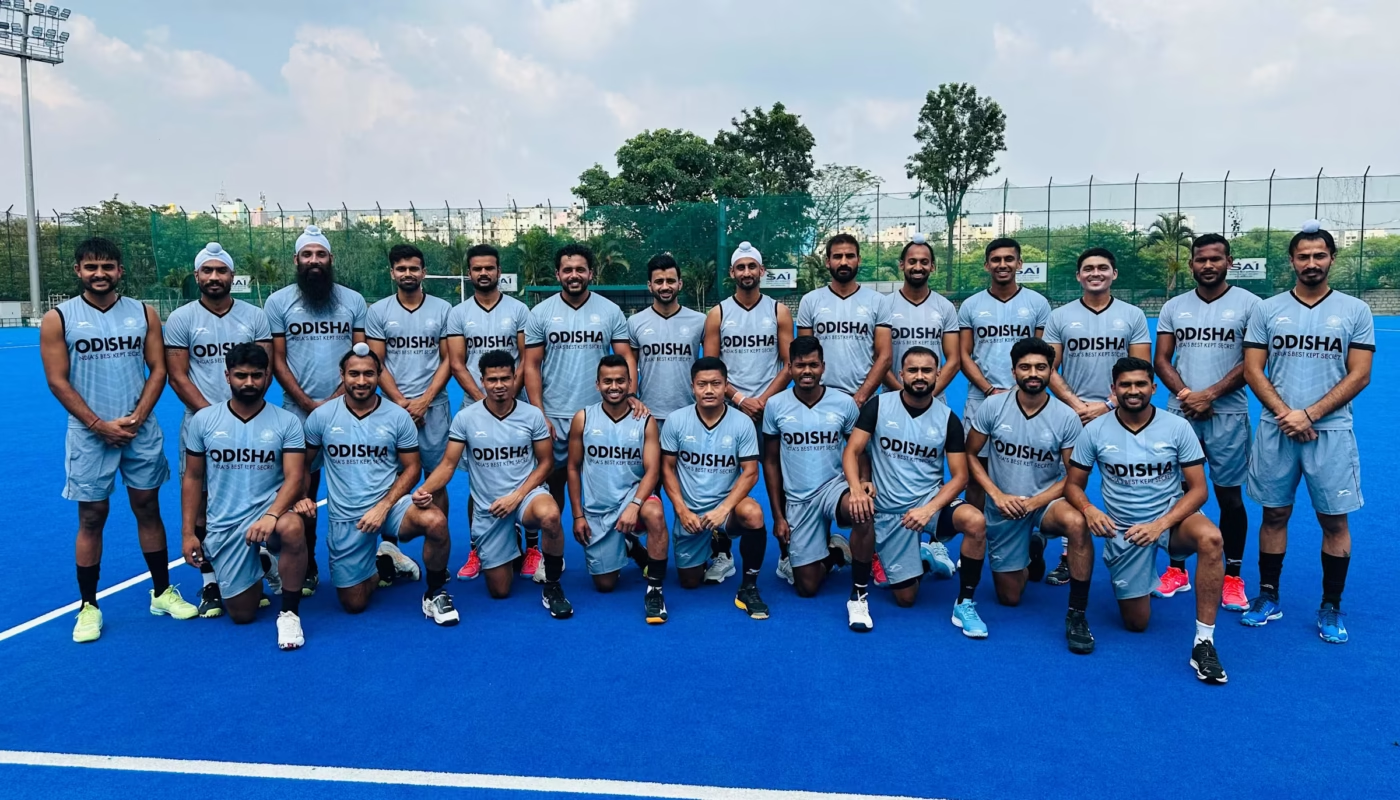
by On September 7, 2025, the Indian men’s hockey team clinched the Hero Asia Cup title with a commanding 4–1 victory over South Korea at the Rajgir Sports Complex in Bihar. This triumph not only marked India’s fourth Asia Cup win but also secured their qualification for the 2026 FIH Men’s Hockey World Cup. The victory was a testament to the team’s resilience and skill, ending an eight-year drought since their last continental title in 2017.
Historical Context
India’s rich hockey legacy is well-documented, with the nation having secured multiple Olympic gold medals and World Cup titles in the past. However, in recent decades, the team has faced challenges in maintaining its supremacy. The Asia Cup victory is a testament to the strides made in rebuilding the team and restoring its competitive edge in the continent.
Current Landscape
The 2025 Asia Cup showcased India’s resurgence in Asian hockey. The team demonstrated resilience and tactical acumen, overcoming challenges posed by formidable opponents like South Korea and Malaysia. The victory was a collective effort, with standout performances from players such as Harmanpreet Singh, who led the team with distinction. The Economic Times
However, while the Asia Cup victory is commendable, it also serves as a reminder of the disparities that exist between Asian and global hockey standards. The real test for India lies in competing against top-tier teams from Europe, Oceania, and Africa, who have consistently outperformed in international tournaments.
Challenges on the Global Stage
- Tactical and Technical Gaps: While India excels in speed and agility, there are areas in tactical execution and technical skills that need refinement. Teams like the Netherlands, Australia, and Germany have demonstrated superior game strategies and technical precision.
- Mental Toughness: In high-pressure situations, Indian teams have occasionally faltered. The ability to maintain composure and execute under pressure is crucial in international competitions.
- Consistency: Achieving consistent performances against top-ranked teams remains a challenge. While India has shown flashes of brilliance, sustaining that level against elite teams is imperative.
- Infrastructure and Support Systems: While strides have been made in improving facilities, there is still a need for enhanced support systems, including sports science, nutrition, and recovery protocols, to match global standards.
Way Forward
To bridge the gap between Asian dominance and global competitiveness, the following steps are essential:
- International Exposure: Regular participation in tournaments against top-ranked teams will provide invaluable experience and insights into areas of improvement.
- Coaching and Training: Engaging with international coaching experts and adopting best practices in training methodologies can enhance the team’s performance.
- Youth Development: Investing in grassroots programs and nurturing young talent will ensure a steady pipeline of skilled players for the future.
- Mental Conditioning: Incorporating sports psychologists to work on mental toughness and resilience can prepare players for high-stakes situations.
- Infrastructure Enhancement: Upgrading facilities and providing state-of-the-art equipment will aid in the holistic development of players.
Conclusion
While India’s victory in the 2025 Asia Cup is a significant achievement, it is merely a stepping stone towards reclaiming global supremacy in hockey. The real challenge lies in translating regional success into global dominance. With focused efforts, strategic planning, and a commitment to excellence, India can aspire to once again be a force to reckon with on the world stage.