 by
by India and Sri Lanka have renewed tensions over tiny Katchatheevu Island and overlapping fishing rights in the Palk Strait. In early 2024 Prime Minister Modi blasted Congress over documents he said “callously” ceded this 285‑acre islet to Sri Lanka. Tamil Nadu politicians likewise point to soaring arrests of their fishermen, arguing that India’s 1974 treaty with Sri Lanka sacrificed their livelihoods. This once‐dormant issue has thus combined emotional politics with hard legal questions. The coming months — including a scheduled Supreme Court hearing in September 2025 tamilguardian.com — will test whether New Delhi can balance treaty obligations with the humanitarian need to protect traditional fisherfolk.
Background
Katchatheevu (also Katchatheevu or Kachchatheevu) is an uninhabited speck in the Palk Strait, roughly 33 km off Rameswaram (India) and 62 km from Jaffna (Sri Lanka). The island’s only structure is St. Anthony’s Shrine, a 20th‑century Catholic church. For decades before 1974 both Sri Lankan and Indian Tamil fishermen visited Katchatheevu to pray and dry their nets during the annual festival newindianexpress.com. (Indeed, India’s own records note that the 1974 agreement placed Katchatheevu on Sri Lanka’s side of the maritime boundary, while permitting Indian pilgrims to come ashore for the festival or to tend their gear ceylontoday.lk.) Historically the tiny island belonged to the Raja of Ramnad under the Madras Presidency, but it had fallen under British Ceylon’s administration by 1921 en.wikipedia.org.
In December 1974 India and Sri Lanka signed a maritime treaty that formally placed Katchatheevu under Sri Lankan sovereignty. Two years later a supplementary 1976 agreement drew fishing limits: Indian fishermen lost access to the waters around Katchatheevu and nearby Indian Ocean zones. In practice this ended centuries‑old fishing by Tamil Nadu trawlers in the nutrient‑rich seas north of the 12‑nautical‑mile limit.
The cession was immediately controversial in Tamil Nadu. The DMK and AIADMK state governments strongly protested that New Delhi had negotiated away a part of India without the state’s consent newindianexpress.com . In 1991, the Tamil Nadu Assembly passed a resolution demanding the retrieval of Katchatheevu tamilguardian.com . In 2008 AIADMK supremo J. Jayalalithaa petitioned India’s courts, arguing the 1974 treaty required a constitutional amendment (and Parliament’s approval) which was never obtained newindianexpress.com. Later, DMK leader M. Karunanidhi and, most recently, Chief Minister M.K. Stalin renewed such demands by letters, Assembly resolutions and Supreme Court filings, all claiming that transferring the island hurt Tamil fishermen and breached India’s constitution indianexpress.com.
Legal Dimensions
The core legal argument is this: can the government unilaterally cede what petitioners say is Indian territory without a constitutional amendment? By longstanding Supreme Court precedent, the answer is no. In the landmark Berubari Union case (1960), India’s top court ruled that “India could not transfer any part of its territory to a foreign nation without a constitutional amendment” benchnotes.in. The Berubari judgment makes clear that altering sovereignty over land or territorial waters normally requires Parliament to pass an amendment under Article 368. Tamil Nadu’s petitions therefore insist the 1974 and 1976 pacts are void for want of such approval indianexpress.com .
Jayalalithaa’s 2008 petition framed this argument bluntly: Katchatheevu “belonged to India” and was ceded “without the approval of Parliament, thus rendering it null and void” newindianexpress.com. Karunanidhi likewise filed petitions in 2013 claiming the agreements are ex facie unconstitutional newindianexpress.com. These submissions cite history (the Ramnad kingdom’s title) and contiguity to Tamil Nadu to back their view that treaty-making alone could not extinguish India’s claim.
The Union government rejects that view. New Delhi’s 2014 affidavit told the court that “no territory belonging to India was ceded nor sovereignty relinquished” because Katchatheevu had long been a disputed land under British‑era maps indianexpress.com. From this perspective, no constitutional amendment was needed since nothing “legally Indian” was given away. In effect, the two sides dispute whether Katchatheevu was ever recognized Indian territory after independence. The judiciary has not yet resolved this; the Supreme Court has set a final hearing on September 15, 2025 to decide the constitutionality of the 1974/76 agreements tamilguardian.com. That judgment will clarify whether a parliamentary amendment was required, or if Sri Lanka’s title must stand under the law of treaties.
Fishing Conflict
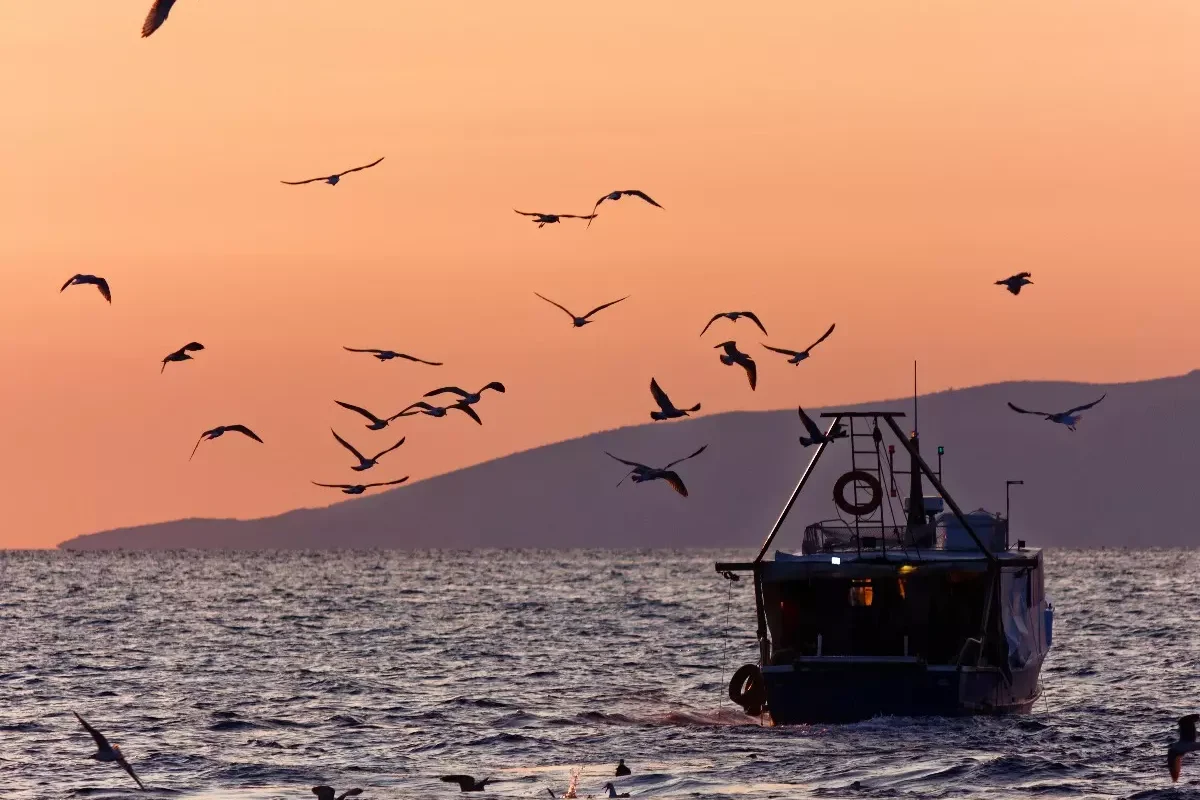
Indian fishermen operate traditional boats in the Palk Strait (Chennai harbor shown). As stocks near India’s shore declined, Tamil Nadu fishers repeatedly strayed into Sri Lankan waters – sparking frequent naval arrests. Official figures show a sharp escalation: 528 Tamil Nadu fishermen were detained by Sri Lankan authorities in 2024 (up from 220 in 2023) mea.gov.in. In the Indian Parliament the External Affairs Minister noted that this averaged about “two fishermen being arrested daily” indianexpress.com. About 2 were killed in these encounters in 2024 (per the MEA data) mea.gov.in. Tamil Nadu reports that roughly 1,383 of its fishers were seized from 2021–early 2025, with 1,287 repatriated and 96 still held (along with 229 boats) indianexpress.com. At any moment dozens of fishermen may be languishing in Sri Lankan jails, anxiously awaiting legal aid or release.
Hundreds of these fishermen insist they had no intent to trespass. Marine experts say traditional fishing grounds on the Indian side have been exhausted – partly by pollution and especially by bottom‑trawling (which Sri Lanka has since banned) aljazeera.com. Trawlers drag nets over coral reefs, devastating breeding habitats; a conservationist notes that Indian waters are now far poorer than Sri Lanka’s coastal shelf aljazeera.com . To the coastal Tamil community, the sea just past the maritime border is seen as part of “their fishing ground”, especially since the international boundary is only ~12 nautical miles from Rameswaram aljazeera.com . One association leader put it bluntly: “If fishermen return without any fish, they cannot survive” aljazeera.com .
Back in Rameswaram, fisherfolk prepare nets and hope for the best. NGOs report that Indians are often beaten or chained on detention by the Sri Lankan navy, heightening fears. In September 2024, five Tamil Nadu men were released by Sri Lanka after being forced to pay fines – famously returning home tonsured and traumatized. The human toll has drawn protests in Tamil Nadu against New Delhi’s handling of the crisis. The Indian government insists it treats the issue as humanitarian: diplomats repeatedly urge Colombo to “avoid use of force” and regularly visit detained fishers mea.gov.in. Nonetheless, the impasse persists whenever a trawler drifts over the line.
Diplomatic Implications
Katchatheevu and the fishing row have become a diplomatic headache. Officially, both New Delhi and Colombo aim to keep broader ties on track. India’s government emphasizes bilateral fisheries dialogues – for example, its Prime Minister raised the fishermen issue during a December 16, 2024 summit with Sri Lanka’s President mea.gov.in. New Delhi also highlights that it secured the release of 2,082 fishermen and 380 boats through sustained talks and joint working groups (the latest JWG fisheries meeting was in October 2024). New Delhi conveys to Sri Lanka that fishermen should be treated humanely and that livelihood concerns transcend politics mea.gov.in.
In contrast, Colombo’s stance on Katchatheevu itself is immovable. Sri Lankan leaders repeatedly assert sovereignty over the island. In July 2025 Foreign Minister Vijitha Herath declared that Sri Lanka “will never agree to let go of a part of Sri Lanka which is Katchatheevu” business-standard.com, calling Indian claims merely internal Indian politics. President Anura Dissanayake underscored that message during an unscheduled Sept. 2025 visit to the island: he walked the shores with navy officers and proclaimed that Katchatheevu is an “integral part of Sri Lanka” which must be protected from any “foreign encroachers” indiatoday.in . Colombo therefore rejects any talk of revisiting the boundary. Herath and Dissanayake have brushed off local Indian agitation — calling it electoral rhetoric — and insist all issues should be handled diplomatically at the official level business-standard.com.
The standoff has a clear framing: India pursues fishermen’s welfare under existing law, while Sri Lanka holds that the 1974 boundary is final. In practice, bilateral relations have weathered bigger storms – both sides continue major defense and economic cooperation – but the Katchatheevu issue remains a sore point. India’s fishermen blockade or release discussions have not altered Sri Lanka’s position on the island. Indeed, analysts note that recent high-level talks have built “a spirit of bonhomie” that might be extended to fisheries if both sides choose to prioritize it icsf.net. For now, however, the diplomatic momentum is directed mainly at freeing individual detainees and defusing local flashpoints, rather than redrawing any borders.
Way Forward
There is broad consensus that a lasting solution must go beyond rhetoric. Experts and fishery groups suggest combining humane outreach with concrete resource management. Possible steps include:
- Expanded bilateral dialogue. Hold regular joint fisheries meetings that include local fishermen’s representatives, not just officials. Such forums can build trust and let Tamil Nadu and Jaffna fishers discuss practical safeguards (e.g. defined no‑fishing zones or patrols) in a more transparent way icsf.net.
- Promote sustainable alternatives. Offer incentives for Indian trawler crews to switch to deep‑sea or coastal fishing within the legal limit. New Delhi has begun subsidizing off‑shore fishing vessels; continuing this can reduce dependence on disputed waters. Likewise, investment in alternative livelihoods (boat repair, aquaculture, tourism) can ease pressure on shared stocks.
- Enforce ecological measures. Building on Sri Lanka’s 2017 ban on destructive bottom‑trawling, both governments could jointly police illegal nets. The two countries might coordinate monitoring of coral reefs and fish populations, ensuring long‑term sustainability so that in future fewer fishers feel driven to cross borders.
- Humanitarian assurances. Maintain strong consular support for arrested fishermen and work to standardize penalties. Indian diplomatic missions should continue visiting jails and providing legal aid mea.gov.in. Officials suggest fast‑tracking the release of unintentional trespassers under clear guidelines.
- Legal clarity. Expedite the Supreme Court’s review so that the legal status of Katchatheevu is finally settled. A judicial ruling – even if it upholds the treaty – could at least quash uncertainty. Conversely, if the Court demands new negotiations, New Delhi should be prepared with a plan that protects Indian fishing rights in some form (for example, by seeking an exchange or compensation elsewhere).
In short, the way forward lies in pragmatism and partnership. As Rahul Muralidharan of ATREE and other analysts note, India must improve its domestic fisheries management and work “to start building… a strategic relationship” on the fishermen issue icsf.net. By focusing on joint conservation and the welfare of Tamil and Sri Lankan fishing communities, both nations might finally move past fifty years of impasse. For Tamil Nadu’s fishermen, who face constant uncertainty and danger, any solution must deliver more fish in their nets – whether by new patrol lines, seasonal fishing zones, or alternate livelihoods – while respecting sovereignty.
Conclusion
The Katchatheevu dispute and the Palk Strait fishing conflict remain deeply sensitive. They pit India’s legal commitments and international accords against the urgent needs of coastal communities in Tamil Nadu. With elections approaching and emotions running high, Indian politicians will continue to debate the island’s fate. But the suffering of ordinary fishermen is a stark reminder that demarcating lines on a map can never erase human hardship. Ultimately, New Delhi and Colombo face a choice: insist rigidly on past treaties, or adapt to present realities through goodwill and compromise. Either way, the coming Supreme Court ruling and ongoing bilateral talks will shape whether these age‑old waters become a bridge of cooperation – or a persistent bone of contention.