 by
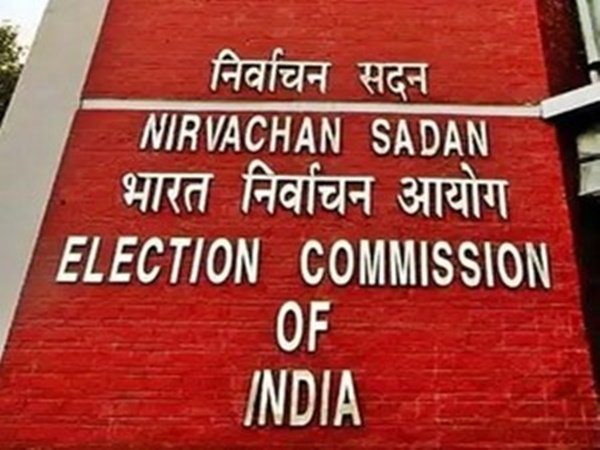
by The Election Commission of India (ECI)—the independent constitutional body tasked with organizing India’s elections—is entrusted with upholding electoral integrity, universal suffrage, and a level playing field for all voters and parties. The Commission compiles voter rolls, schedules elections, enforces the Model Code of Conduct, and oversees polling logistics with a carefully balanced mandate.
Since early July 2025, ECI has embarked on a Special Intensive Revision (SIR) of electoral rolls in Bihar, with plans to extend similar exercises nationwide. Ostensibly aimed at weeding out “bogus” voters, SIR has become the flashpoint of a constitutional crisis: critics allege that millions have been removed without notice, forced to produce documentation approximating a citizenship test, and effectively stripped of voting rights. As Parliament broke into protests and the Supreme Court opened review hearings, many claim that an ambitious administrative exercise is undermining democratic trust.
The Issue
Several elements of the SIR exercise raise fundamental concerns:
- Deletion of legitimate voters. Over 65 lakh names were removed from Bihar’s rolls, including several visible citizens and political figures—such as Opposition leader Tejashwi Yadav, who initially claimed his name was erased despite possessing a valid EPIC (though later found listed at a different polling station).
- Undue burden on citizens. Reports suggest that 80 million people are being asked to prove citizenship using documents such as birth certificates or parental proof—some of which are not mandated in other democratic systems. Civil society and ex-civil servants argue this amounts to a “de facto citizenship test,” far beyond ECI’s constitutional remit.
- Constitutional overreach. The Trinamool Congress and others have pointed out that ECI has no mandate under the Citizenship Act or Supreme Court judgments to verify citizenship—a function belonging to the Ministry of Home Affairs. Many see the SIR process as a backdoor form of NRC-like exclusions without legislative sanction.
- Insufficient transparency and recourse. Civil groups allege that booth‑level officers (BLOs) are operating with excessive discretionary power, leading to opaque deletions and no proper grievance redressal. Whistleblowers say the ECI is drawing flak for “grave disrepute” and reverse-exercising authority to eject voters without due process.
Data & Analysis
| Issue | Why it matters |
|---|---|
| Scale of exclusion | 65 lakhs removed in one state—if extended nationwide, hundreds of millions could be affected. |
| Timing | SIR is being conducted mere weeks before assembly polls—pressure on registration raises risk of disenfranchisement. |
| Supreme Court scrutiny | The SC has rebuffed delays but asked ECI to clarify “citizenship” evidence and accept commonly held IDs such as EPIC and ration cards. |
| Democracy indices slipping | Freedom House and V‑Dem have downgraded India’s democratic rating to a “hybrid regime” due to erosion of institutional trust and civil liberties. |
This is not just a bureaucratic snafu. If the ECI’s current pathology spreads, entire communities—migrant workers, poor households, elderly citizens—may be effectively blocked from voting in India’s largest electoral rolls revision since 2003.
Way Forward
Reaffirming that the ECI’s independence and constitutional mandate must not be subsumed by political engineering, the following reforms are essential:
- Protect the presumption of voter eligibility. Instead of presuming fraud and forcing voters to verify citizenship, rolls should be revised using document-sparse inclusion. Proof such as EPIC, voter list, or ration card should be accepted—only requiring rebuttable presumptions, not full vetting.
- Phase it correctly with clear appeal windows. Any roll cleanup should be announced early in the electoral calendar, with at least 30 days notification and multiple grievance channels, including public listing of removals and easy way to re‑enroll.
- Supreme Court ordering & Parliament oversight. The SC’s guidance—that ECI is not the citizenship authority—needs statutory codification. A parliamentary select committee on election reforms should be convened before such a nationwide revision.
- Transparency and data‑driven audits. Voter deletions, additions, objections, and reinstatements should be publicly logged in real-time on ECINET (the new integrated digital portal), ensuring audit trails and accountability.
- Institutional strengthening of ECI. Rather than politicizing the Commission, legal reforms should reinforce the unbridled independence of Chief Election Commissioner and Electoral Commissioners, following 1991 conventions—not recent downgrades in “service conditions.”
Conclusion
A robust electoral process is the backbone of any democracy. While ensuring voter list accuracy is essential, it cannot be done at the expense of sect or class-based disenfranchisement, administrative opacity, or constitutional overreach.
If the SIR becomes a national template without recalibration, India risks sliding into a model where voting becomes conditional on paperwork—not citizenship. That undermines the universal, birthright-based franchise enshrined in the Constitution. Still, the ECI can reclaim credibility if it recalibrates the process to centre transparency, inclusion, judicial oversight, and institutional independence.
In its current form, the SIR exercise does hamper democracy—by creating grounds for suspicion, disenfranchisement, and exclusion. But it need not be fatal. With urgent reforms, the ECI can preserve the sanctity of the ballot box and strengthen democratic norms—rather than eroding them.