 by
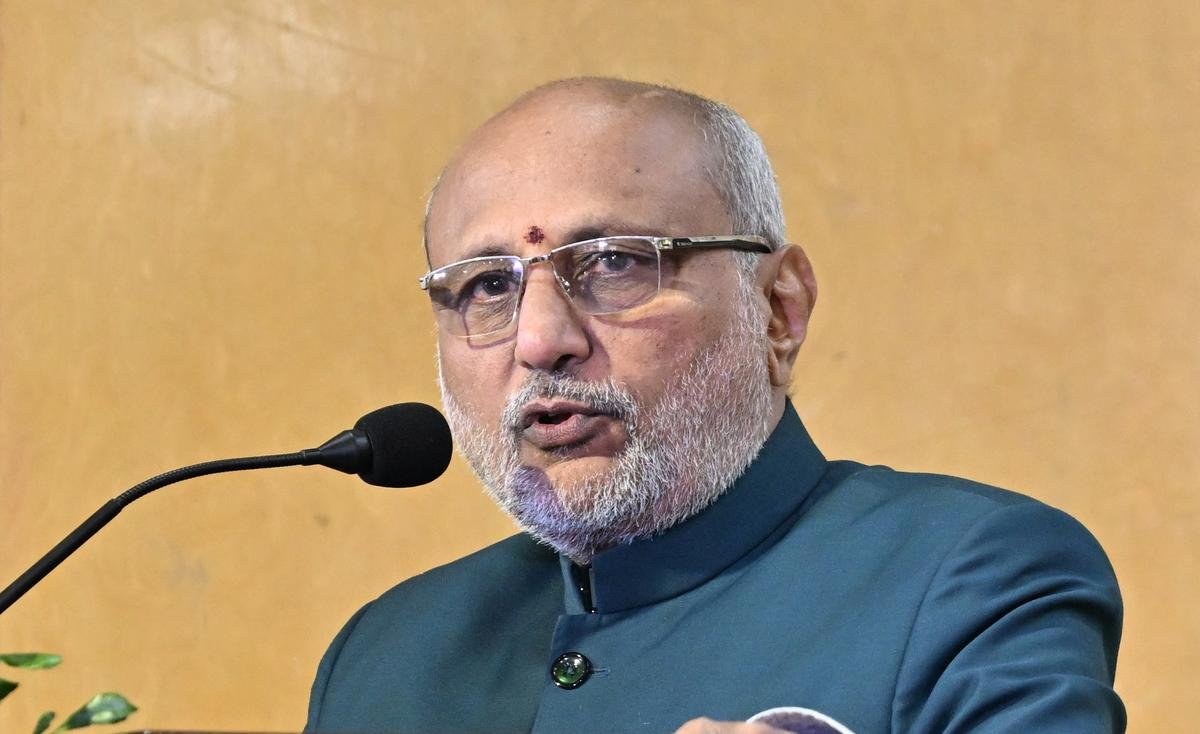
by C. P. Radhakrishnan was sworn in as India’s 15th Vice-President on 12 September 2025 and, by constitutional design, becomes the ex-officio Chairperson of the Rajya Sabha. That appointment places a man known for personal faith and partisan experience into an institutional role that increasingly looks like a pressure cooker: the Upper House has repeatedly been racked by vociferous protests, adjournments and clashes between government and opposition MPs during the recent monsoon session. The immediate problem is simple — how does a Chair who wears a public identity as a “man of faith” steer a fractious House so it can do its constitutional work without sacrificing fairness or free speech? The Times of India+1
Why this matters beyond the headlines
The Vice-President’s chair is not ceremonial when the Upper House cannot function. Persistent disruptions mean fewer debates, delayed legislation and limited oversight of the executive. That degrades parliamentary accountability and erodes public confidence. Worse, an inability to manage the floor fuels narratives — inside and outside the House — that procedure is being weaponised for political advantage. Given the Rajya Sabha’s role in representing states and reviewing national legislation, the stakes are institutional: the Vice-President’s first months will set expectations about impartiality, enforcement of rules, and whether decorum can be reconciled with robust dissent. Vice President of India+1
Geographical and Political Context
The story plays out in New Delhi’s Parliament House but has echoes in state capitals and in the national political conversation. The Rajya Sabha is expressly a federal chamber: it is meant to give voice to states and provide sober second thought on laws passed by the Lok Sabha. Politically, India remains sharply polarised — the governing coalition enjoys a parliamentary majority, while an increasingly assertive opposition has used coordinated protests and procedural tactics to frustrate House business during the Monsoon Session. Those flashpoints (from electoral roll disputes in Bihar to questions about security arrangements inside Parliament) have repeatedly spilled over into televised confrontations that shape public opinion across India’s regions. The Indian Express+1
Historical and Legal Background
The Vice-President’s chair is constitutionally anchored: Article 64 makes the Vice-President the ex-officio Chairman of the Council of States, and Articles 105 and 122 define parliamentary privileges and limit judicial interference in proceedings. That framework gives the Chair important powers to regulate debate and maintain order, and it also protects legislators’ freedom of speech within the House. But those protections are not absolute. The Supreme Court’s landmark decision in Raja Ram Pal v. Speaker, Lok Sabha (2007) clarified that parliamentary privileges are subject to constitutional limits and judicial review in cases of gross illegality — an important check on arbitrary action by either the Chair or the House. In short: the Vice-President must act within constitutional guardrails that balance free speech, privilege and judicial oversight. cms.rajyasabha.nic.in+2Constitution of India+2
Current Situation — latest developments
The Monsoon Session of 2025 was frequently interrupted. Multiple sources recorded adjournments, sloganeering, and even members entering the well of the House as opposition parties demanded discussions on matters such as the Special Intensive Revision of electoral rolls in Bihar. Parliamentary affairs ministers have complained about hundreds of lost hours of legislative time; the House has passed only a limited set of measures while many notices and questions remained unresolved. Against that febrile backdrop, the new Vice-President takes the Chair: his immediate task will be to preside over a House that expects assertive order-keeping, while critics will watch for any tilt toward partisanship. The optics matter: a Vice-President with a public identity rooted in faith and conservative politics will be judged on whether he defends procedure, protects dissent and enforces rules evenly. The Economic Times+1
Way Forward — practical steps for the Chair, parties and institutions
A functioning Rajya Sabha requires institutional fixes and behavioural changes. Below are pragmatic, politically feasible measures that the Vice-President, members and parliamentary authorities should pursue.
- Begin with visible, neutral confidence moves. The new Chair should open with clear rules for conduct (published and circulated) and a modest confidence-building statement: commit to impartial application of rules, transparent reasons for rulings, and to hearing urgent adjournment items within a fixed timeframe. That will lower immediate temperature and send a signal that the Chair’s office will be principled rather than performative. (See Rajya Sabha practice guides for precedents.) cms.rajyasabha.nic.in
- Strengthen procedural clarity and training. Many disruptions arise from procedural confusion — what notices are admissible, when Rule 267 (suspension of business) should be invoked, or how to treat sub judice claims. Parliament should publish concise primers and hold orientation sessions for members (especially newly elected ones) to reduce tactical misuse of rules.
- Use graduated sanctions, not blanket shutdowns. A calibrated toolkit — warnings, short suspensions, limitation of speaking time, and (in extreme cases) motion to suspend membership following established privilege procedures — is better than ad hoc adjournments. The Raja Ram Pal judgment reminds us that sanctions must respect constitutional rights and be open to judicial scrutiny if they cross legal bounds. Indian Kanoon
- Institutionalise pre-session consultations. The Chair should convene a bipartisan pre-session meeting with leaders of parties to agree on urgent items, a shared agenda for key bills, and mechanisms for airing grievances without clogging Zero Hour. Many parliaments use such “business committees”; the Rajya Sabha’s rules already allow for informal coordination and should use them more, not less. cms.rajyasabha.nic.in
- Protect media and transparency while safeguarding privilege. Parliament must continue allowing accurate reporting of proceedings (essential for accountability) while using privilege sparingly and with detailed reasons. That balance keeps the public informed without enabling impunity inside the House.
- Invest in parliamentary infrastructure and marshals. Clear rules for security presence, marshals’ roles and access to the floor can reduce disputes about outsiders or procedural breaches that escalate into full-blown uproar. Independent reviews of controversial incidents (video review, factfinding) will defuse “he said, she said” cycles.
Conclusion — what leadership must deliver
The Vice-President’s take-off into office arrives at a test: can a “man of faith” and veteran politician transform himself into an impartial institutional arbiter in a House beset by combativeness? The answer will shape not only how many bills are debated this winter but how Indians view the health of their republic. The Chair must be visibly neutral, procedurally rigorous and modest in exercise of powers precisely because parliamentary protections are not a license for excess. If the new Vice-President secures even a modest improvement in on-floor behaviour — fewer pointless adjournments, clearer rulings, better pre-session coordination — he will have strengthened the Rajya Sabha’s capacity to perform its constitutional duties.
The larger lesson is constitutional: institutions outlast personalities when they are defended by consistent, rule-bound leadership. The new Vice-President has an opportunity — and an obligation — to show that faith can coexist with fairness, that conviction need not become coercion, and that the dignity of the Chair is best preserved by impartiality, not partisanship. The House, the parties and the public should measure him by that standard.