by
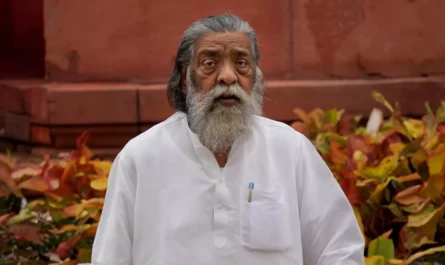
by Satya Pal Malik (b. 24 July 1946 – d. 5 August 2025) culminated a long political journey when he assumed gubernatorial roles in Jammu & Kashmir, Goa, Meghalaya, Bihar, and Odisha between 2017 and 2022. His tenure coincided with transformative and contentious events, including the abrogation of Article 370 in J&K. Throughout, Malik oscillated between institutional duty and outspokenness, revealing an ideological complexity that defied simple categorization.
Inherited Socialist Roots (Left-Inspired)
Malik began his career rooted in agrarian socialism, aligned with leaders like Chaudhary Charan Singh and Ram Manohar Lohia. His early affiliations with parties like Lok Dal and Janata Dal reflected activist solidarity with farmers and anti-establishment populism. Even during his governorship, he maintained a left-leaning sensibility—particularly evident during the 2020–21 farmers’ protests, when he openly criticized central policies and aligned with protestors, defying expectations of gubernatorial neutrality.
Institutional Authority and Right-of-Centre Roles
Despite his socialist origins, Malik accepted high constitutional office under a right-of-centre central government. As Governor of J&K during 2018–19, he witnessed firsthand and administered decisions leading to the revocation of special status. Though part of the establishment, his governance choices were not always in line with party expectations, demonstrating a tension between constitutional appointment and personal conscience.
Moments of Defiance
Pulwama Commentary and Silencing Allegations
Perhaps the most controversial revelations emerged in a 2023 media interview. Malik claimed that after the 2019 Pulwama terrorist attack—killing over 40 CRPF personnel—the Union Home Ministry denied air transport for personnel, exposing systemic intelligence failures. He further alleged that PM Narendra Modi and NSA Ajit Doval personally asked him to “remain silent” on these lapses. His narrative stirred significant debate, with farmers’ and khap leaders publicly backing him and calling for probes into his allegations.
These remarks polarized reactions. Some lauded his courage and independent voice. BJP critics responded with blame, mockingly suggesting he sought martyrdom in his old age. Reddit commentary highlighted skepticism, with users calling the claims either bold or opportunistic.
How History Might Frame Him
Left Perspective: The Socialist Dissenter Within
From a left-leaning historical lens, Malik may be remembered as a socialist conscience inside the right-wing establishment. His vocal defense of farmers and public criticism of the government’s handling of Pulwama aligned with anti-establishment and civil society concerns, bolstering his image as a principled outlier aligned with the masses rather than machinery of state power.
Right Perspective: Constitutional Controversy
Right-leaning observers, while noting his role in implementing core government decisions like the Article 370 repeal, often viewed his later outspokenness as inconsistent with the restraint expected of a governor. His criticisms of central leadership—especially public allegations about Pulwama—cast him as a problematic dissenter who breached norms of neutrality.
A Hybrid Legacy
Ultimately, Malik’s public memory is likely to reflect a hybrid identity: an official representing state prerogative, yet one willing to dissent publicly on matters of justice, farmers’ rights, and security—resulting in a legacy of both institutional compliance and ideological resistance.
Institutional Lessons and Implications
- Value of Internal Dissent: Malik’s actions reaffirm the importance of constitutional officeholders speaking independently in matters of public interest, especially where systemic failure is suspected.
- Risks of Executive Excess: However, his departure from convention spotlights risks when personal candor overrides procedural discretion, potentially undermining institutional credibility.
- Need for Consistency and Documentation: His shifting narratives, especially around Pulwama, illustrate the importance of disciplined public engagement and documented evidence, particularly when making serious allegations.
Conclusion: A Complex and Contradictory Legacy
Satya Pal Malik’s historical memory will not be anchored in a single political ideology. His grassroots roots and farmer advocacy resonate with left-wing principles, while his roles as governor under a right-of-centre government placed him at the center of pivotal national events. His most memorable acts—especially his Pulwama revelations—occurred after his gubernatorial tenure but deeply connected to it.
As India confronts polarized political narratives, Malik symbolizes that constitutional authority and ideological conviction can coexist in tension. History may remember him neither strictly as a left champion nor as a right stalwart—but as a voice straddling both sides: institutional yet insurgent; appointed yet rebellious; a governor who dared to dissent from within.