 by
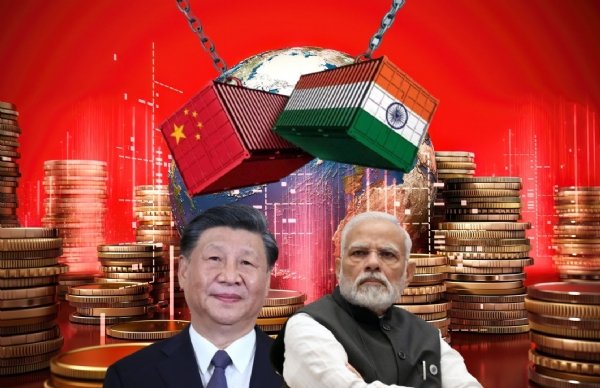
by As India navigates the complex realities of 2025, the need to understand China’s strategic blueprint has never been more urgent. Despite recent diplomatic thaw and Prime Minister Modi’s optimistic pronouncements about achieving “normalcy” at the border, India remains vulnerable to Chinese coercion across multiple domains. Decoding China’s comprehensive strategy reveals critical lessons that India must internalize to safeguard its national interests and democratic future.
The Illusion of Normalcy
Prime Minister Modi’s recent assertion that India and China have achieved “normalcy” at the border, following their deadly 2020 Galwan Valley clash that killed twenty Indian and four Chinese soldiers, reflects a diplomatic optimism that may obscure deeper structural challenges. While both sides have agreed on phased implementation of an agreement to end their military standoff along the disputed Himalayan border, this tactical de-escalation masks China’s long-term strategic positioning.
The border dispute is merely a symptom of a much broader and deeper geopolitical rivalry, with both China and India viewing themselves as civilizational states whose growing prominence brings inevitable competition. Despite the recent thaw, the India-China relationship remains poised to be tumultuous in 2025 due to their competing geopolitical interests and the shift in regional power dynamics.
China’s Multi-Domain Strategy: Economic Warfare
China’s most potent weapon against India is not military might but economic dependency. India’s trade deficit with China stems from two critical vulnerabilities: India exports primarily raw materials to China while China imposes market access barriers on India’s competitive sectors like agriculture, pharmaceuticals, and IT services. This asymmetric relationship creates leverage that Beijing can weaponize during crises.
The recent recall of over 300 Chinese engineers from Foxconn’s iPhone plant in India in July 2025 demonstrates how quickly economic relations can become geopolitical weapons. China’s position as India’s second-largest trading partner provides Beijing with significant coercive potential that extends far beyond traditional military threats.
This economic vulnerability exposes India to what experts term “economic coercion”—the use of economic relationships to achieve political objectives. China has successfully deployed this strategy against Australia, South Korea, and other nations that challenged its interests, and India remains similarly exposed.
The Infrastructure Encirclement
China’s infrastructure expansion near India’s borders represents a systematic effort to achieve strategic superiority. China is undertaking major infrastructure expansion near its western borders that is enhancing its ability to project military power. This infrastructure development is not merely defensive but creates permanent strategic advantages that India struggles to match.
Chinese officials recognize that a Chinese-dominated Indian Ocean would leave India more vulnerable in any broader conflict with Beijing, following their 2020 deadly clashes over disputed Himalayan borders. China’s “String of Pearls” strategy in the Indian Ocean, combined with its Belt and Road Initiative, creates a geographic encirclement that constrains India’s strategic options.
The infrastructure gap reflects deeper economic disparities between the two nations. Recognition of economic disparities between India and China should serve as the basis for a more realistic military strategy, even as political rhetoric suggests normalization.
Lessons in Comprehensive National Power
China’s approach to competition with India extends beyond traditional military metrics to what Beijing calls “comprehensive national power”—integrating economic, technological, diplomatic, and military capabilities into a coherent strategic framework.
Lesson One: Technology as Strategic Leverage
China has systematically developed technological dependencies that create strategic vulnerabilities for competitors. India’s reliance on Chinese technology infrastructure, from telecommunications to manufacturing equipment, creates potential chokepoints that Beijing can exploit during crises.
Lesson Two: Economic Integration as Political Weapon
China uses economic interdependence not as a path to peace but as a tool of influence. The deeper the economic relationship, the greater China’s ability to impose costs on partners who challenge its interests. India must recognize that economic engagement with China is inherently political.
Lesson Three: Peripheral Strategy
China’s approach to India includes systematic cultivation of relationships with India’s neighbors—Pakistan, Bangladesh, Sri Lanka, Myanmar, and Nepal. This peripheral strategy creates multiple pressure points that Beijing can activate to constrain Indian options.
India’s Strategic Vulnerabilities
India faces several critical vulnerabilities that Chinese strategists understand and exploit:
Economic Dependency: India’s manufacturing sector remains dependent on Chinese inputs, creating supply chain vulnerabilities that extend beyond trade statistics to national security concerns.
Technological Gaps: China-India relations are taking shape not only over physical borders but also in new security areas such as data, energy, and trade routes, creating a multi-layered security environment that can make tensions more unstable.
Infrastructure Deficit: India’s slower infrastructure development along border areas creates permanent strategic disadvantages that tactical military measures cannot overcome.
Diplomatic Isolation: China’s systematic cultivation of relationships with India’s neighbors creates diplomatic encirclement that limits India’s regional influence.
Strategic Lessons for India
Build Economic Resilience
India must systematically reduce critical dependencies on China while building alternative supply chains. This requires not just policy declarations but sustained investment in domestic manufacturing capabilities and diversified international partnerships.
Leverage Asymmetric Advantages
India can develop select areas of advantage over China and stress PLA vulnerabilities through pairing tightly focused operational concepts with targeted changes to its defense organization, select capability investments, and enhanced strategic partnerships.
Strengthen Regional Partnerships
India must counter China’s peripheral strategy by deepening relationships with Southeast Asian nations, Japan, Australia, and others who share concerns about Chinese expansion.
Develop Technological Sovereignty
Critical technologies—from semiconductors to telecommunications—require domestic development or trusted partnerships that cannot be easily weaponized by Beijing.
The Democratic Advantage
India possesses one critical advantage that China cannot easily replicate: democratic legitimacy and soft power. While China’s authoritarian system enables rapid infrastructure development and coordinated strategy, it also creates vulnerabilities that India can exploit.
Democratic India’s partnerships with like-minded nations provide strategic depth that China’s transactional relationships cannot match. The Quad partnership with the United States, Japan, and Australia, along with growing ties with European democracies, creates coalition potential that constrains Chinese options.
The Path Forward: Strategic Realism
Stable China-India relations reduce India’s strategic reliance on the US and make New Delhi less inclined to be a “bulwark” against Chinese expansion. This analysis suggests that tactical stability may serve Chinese strategic interests by reducing international pressure and dividing potential coalitions.
India must therefore pursue what strategists call “competitive coexistence”—engaging China where beneficial while systematically building capabilities to resist Chinese coercion. This requires:
Strategic Patience: Building long-term capabilities rather than seeking immediate confrontation Economic Diversification: Reducing critical dependencies while maintaining beneficial trade Military Modernization: Developing capabilities that exploit Chinese vulnerabilities Diplomatic Coalition Building: Strengthening partnerships with nations that share concerns about Chinese expansion
Conclusion: The Vulnerability Imperative
China’s comprehensive strategy toward India reveals a nation-state engaged in long-term strategic competition that extends far beyond border disputes. Understanding China’s approach—economic coercion, infrastructure encirclement, technological leverage, and peripheral strategy—provides India with a roadmap for building resilience.
The lessons are clear: China views the relationship with India not as partnership but as competition for regional and global influence. India’s vulnerabilities—economic dependency, technological gaps, infrastructure deficits, and diplomatic isolation—are not accidents but targets of Chinese strategy.
India’s response must match China’s comprehensiveness with its own strategic framework that leverages democratic advantages while systematically addressing critical vulnerabilities. The alternative is not conflict but subordination—a future where India’s choices are increasingly constrained by Chinese preferences.
The coming years will test whether India can learn these lessons quickly enough to maintain strategic autonomy in an era of Chinese expansion. The stakes extend beyond India’s interests to the broader question of whether democratic nations can compete effectively with authoritarian powers in the 21st century.