 by
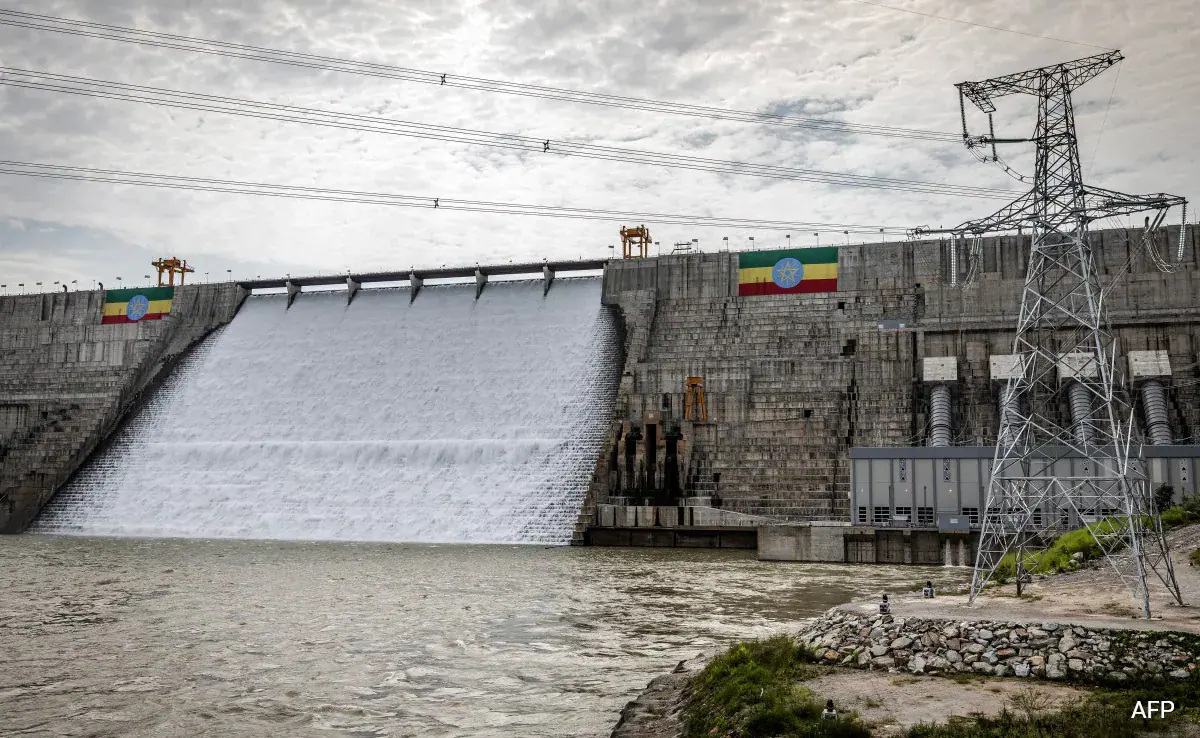
by Ethiopia has inaugurated the Grand Ethiopian Renaissance Dam (GERD), Africa’s largest hydroelectric dam, on the Blue Nile. Built over 14 years with domestic financing (about $5 billion), the GERD has a 74-billion-cubic-meter reservoir and can generate up to 5,150 MW of electricity theguardian.com. Prime Minister Abiy Ahmed hailed the project as a symbol of national unity and regional progress, insisting the dam was built “to prosper, to electrify the entire region” and not to harm Egypt or Sudan gcs.gov.et. Ethiopia plans to use the power to electrify its own population (currently about half lack access to grid power) and export surplus energy to neighbors reuters.com.
However, the move has reignited a long-running Nile water dispute. Egypt – downstream along the Nile – has bitterly opposed the dam from the start, arguing it violates earlier water treaties and threatens its water supply. Cairo’s foreign ministry has labeled Ethiopia’s unilateral dam operations a breach of international law. Egypt warned the United Nations that it “will not allow Ethiopia to impose unilateral control over shared water resources,” reserving the right to take “all measures…under international law” to defend its interests. Sudan has also expressed concern about the GERD’s rapid filling without a firm agreement, even as it acknowledges potential benefits like flood control and cheap electricity.
Why. The GERD is important for multiple reasons. For Ethiopia, it promises to double national power generation and foster economic growth. About 50 million Ethiopians (nearly half the population) still lack electricity, and the dam could transform industries, health, and education reuters.com. It is also a source of national pride – Ethiopian officials call it “proof of [the country’s] united strength” and an “expression of full sovereignty, unity, and African self-reliance”. For Egypt (population ~100 million), the Nile is a lifeline: roughly 97% of its freshwater comes from the river theguardian.com. Any reduction in Nile flows, especially during droughts, could threaten Egyptian agriculture, industry, and urban water supplies. President Sisi has repeatedly called the dam an “existential threat” and vowed to defend Egypt’s “water rights” by all means if necessary egypttoday.com.
In short, the GERD sits at the intersection of development needs and water security. If it works as Ethiopia claims (with careful management of flows), it could improve drought resilience downstream by regulating floods and evaporation. But if mismanaged, it could sharply reduce downstream flow during lean years. Experts warn that without a binding agreement on how and when water is released, tensions may escalate into a regional crisis.
Where. The dam is located on the Blue Nile in Ethiopia’s Benishangul-Gumuz region, near the Sudan border. The Blue Nile starts at Lake Tana in Ethiopia and contributes about 60–85% of the Nile’s water flow, joining the White Nile (from Uganda/South Sudan) at Khartoum, then flowing north through Sudan and Egypt to the Mediterranean. A map of the basin shows the GERD’s position relative to Egypt and Sudan. Ethiopia sits upstream and has the physical advantage: all rainfall in the Ethiopian highlands eventually feeds this dam. In contrast, Egypt and Sudan lie downstream; Egypt relies on almost all the Nile for its annual 55.5 billion-cubic-meter allotment, far short of its actual needs (~90 billion) english.ahram.org.eg. Politically, the dam underscores shifting power dynamics: Egypt has long dominated Nile politics (often invoking 19th-century treaties), but Ethiopia’s rising economic clout and population (now ~120 million) have emboldened it to tap its Nile resource gcs.gov.et.
History and Law
Conflict over Nile water is over a century old. Colonial-era agreements (1929 and 1959, signed by Egypt, Britain (for Sudan), and Sudan) granted virtually all Nile flows to Egypt and Sudan, giving Egypt veto power over upstream projects. Ethiopia was not party to those treaties and has long rejected their legitimacy. In 2011 Ethiopia began building the GERD with funds raised domestically (by bonds, donations, and taxes) climate-diplomacy.org. This move broke the status quo: for decades Egypt had used its diplomatic clout to block new dams in upstream countries, but Ethiopia felt entitled to use its natural resources to end poverty.
From 2011 onward, the three Nile states have engaged in intermittent negotiations. In 2015 Egypt, Sudan and Ethiopia signed a non-binding “Declaration of Principles” to cooperate on the dam, but they failed to hammer out a detailed agreement on filling and operation. Sudan at times pushed for a water-sharing treaty (even proposing an international mediation), while Egypt demanded legally binding guarantees of minimum water releases. Ethiopia, citing sovereignty, resisted anything that it felt would curb its rights. Repeated talks – under the African Union, U.S., and others – ended in deadlock. In practice, Ethiopia proceeded with phased reservoir filling (starting in 2020) and now full commissioning of turbines. It argues this does not significantly harm Egypt or Sudan, especially since rainfall has been strong and fillings were cautious reuters.com.
Legally, the situation is complex. There is no Nile-wide water law binding all 11 riparian states; the downstream countries have relied on historic claims, while Ethiopia and other upstream states cite principles of equitable and reasonable use. International water law (the UN Watercourses Convention) generally forbids harm to other states, but gives wide room for development. So far, there is no court case or UN ruling. Instead, tensions have been managed (or unmanaged) through diplomacy. Egypt has even appealed to the UN Security Council, calling Ethiopia’s act “irresponsible” and in violation of international norms. To date, however, no external body has compelled Ethiopia to change course.
Current Situation. As of late 2025, the GERD is fully operational and producing its maximum output. Inaugurated on 9 September 2025, it now delivers around 5,150 MW – among the world’s 20 largest hydro dams theguardian.com. Ethiopia has installed multiple turbines over the past few years (initial units were turned on in 2022, 2023 and 2024). The reservoir flooded an area larger than Greater London and now holds 74 billion m³ of water. According to Reuters, no “major disruptions” to downstream flow have yet been recorded, thanks partly to heavy rains and Ethiopia’s cautious filling policy reuters.com.
Nevertheless, downstream anxiety is intense. Egypt’s Foreign Ministry and President Sisi have publicly denounced the dam as “existential” danger egypttoday.com. On the day of inauguration, Egypt’s foreign minister sent a letter to the UN Security Council, warning that Ethiopia’s “unlawful unilateral act” violated international law. Egypt stressed it has shown “maximum restraint,” preferring diplomacy, but will take “all measures” to defend its Nile rights. Practically, Cairo has taken no military action, but has strengthened alliances: it has improved ties with Eritrea and is seeking closer relations with other Horn states as a counterbalance. Sudan, which sits between the two, has urged a binding tripartite agreement but is also benefiting in some ways – Sudanese officials note the dam should reduce flooding in wet years and plan to buy surplus power cheaply from Ethiopia.
Ethiopia and its supporters paint a different picture. The Ethiopian government insists the GERD will bring regional benefits. Officials claim the reservoir will allow more reliable irrigation downstream and prevent extreme floods and droughts reuters.com. Hundreds of communities around the dam now have electricity for the first time reuters.com. African leaders from Kenya, Somalia and others attended the opening ceremony and hailed the dam as an “African achievement”. Ethiopia points out that many Nile projects occurred without consulting all states (for example, Egypt’s Aswan High Dam was built without upstream input). It argues that as a sovereign nation, it must tap its own resources to lift millions out of poverty. In press conferences Addis Ababa has reiterated that Egypt’s fears are exaggerated and that it remains committed to data-sharing and “win-win” outcomes. Still, Ethiopia has made no significant concessions so far; it has refused to negotiate a legally binding agreement that limits how fast it can fill or release water, insisting such a deal is unnecessary if rains are good.
Way Forward
Scholars and diplomats warn that the status quo is dangerous. A lasting solution will require political as well as technical steps. Experts urge the three countries to resume talks urgently, ideally under the auspices of the African Union (the “African solution for an African problem” approach) issafrica.org. Confidence-building is needed: Ethiopia could, for example, commit to a transparent filling schedule and share real-time river data, as a gesture of goodwill. Egypt and Sudan could recognize Ethiopia’s development needs while insisting on safeguards.
Concrete proposals include drafting a binding water-sharing treaty. Such an agreement should codify minimum annual flows or emergency releases during droughts, agreed to by all riparians. It could establish a permanent Nile Basin Commission or task the existing Nile-Council-of-Ministers (Nile-COM) with authority to resolve disputes brookings.edu. Many analysts argue that drought mitigation protocols are essential: in a dry year, Ethiopia would agree to release additional water from GERD to support Egypt and Sudan, in exchange for technical or financial help from those countries.
Also, a more integrated regional approach would help. Ethiopia hopes to export thousands of MWs to neighbors; Egypt and Sudan could invest in grid infrastructure to receive that power (and in Egypt’s case, invest further in desalination or irrigation efficiency to reduce water strain). Joint projects – such as shared hydro or solar farms – could foster cooperation. The African Development Bank and UN have offered to support data-sharing and joint studies. In short, the three countries should move toward a “mutually beneficial rights” framework, as Brookings experts describe it, replacing colonial-era claims with modern collaboration brookings.edu.
Conclusion
The launch of the GERD represents Ethiopia’s ambition to put “power first,” but it has underscored how perilously diplomacy has lagged. A new era of Nile politics is dawning: upstream countries are asserting their rights more forcefully, while downstream states fear for their survival. The stakes – food security, economic development, and peace – are enormous for millions of people. Moving forward, all sides must recognize that no country can fully control the Nile alone. As one analyst put it, the way out is through shared governance, not confrontation chimpreports.com. Egyptian, Sudanese and Ethiopian leaders – together with African and international partners – now face a stark choice: broker a fair water-sharing deal or risk a conflict that could engulf the region.